Birsing Jarua: A New Political Landscape in Assam Ahead of 2026 Elections
Introduction to Birsing Jarua Constituency
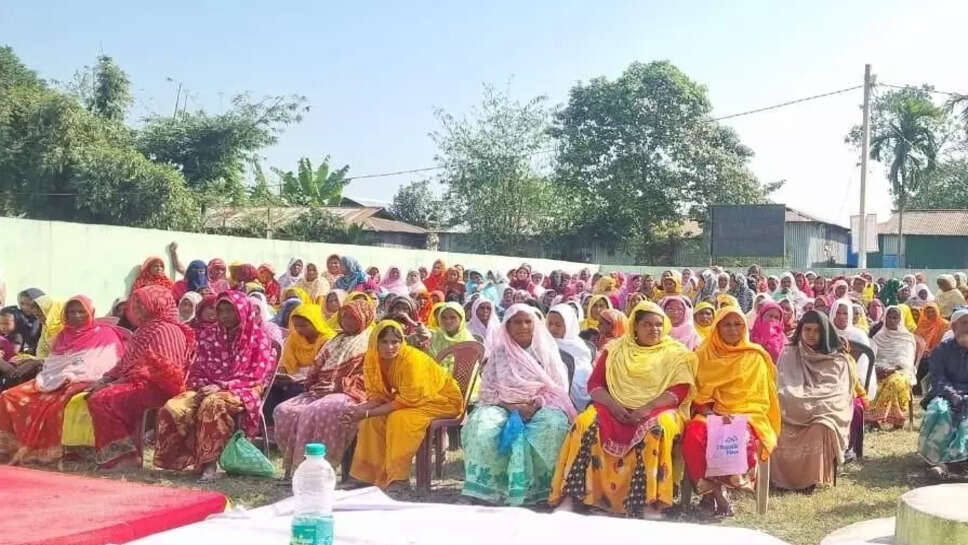
An image of citizens of Barsing Jarua constituency (Photo - @dcofficedhubri / X)
Dhubri, April 3: Following the recent delimitation in Assam, the newly formed Birsing Jarua Legislative Assembly Constituency has quickly become a focal point in Dhubri district as the Assembly elections approach.
Constituency Formation and Geography
This constituency was established through a detailed reconfiguration of existing territorial boundaries, reflecting the demographic shifts and political dynamics in western Assam. Birsing Jarua was created by merging specific regions from the former Bilasipara East and West constituencies, along with portions of South Salmara and Gauripur, resulting in a significant transformation of the electoral landscape in the district. While the previous Bilasipara constituencies have been consolidated, Birsing Jarua emerges as a distinct political entity with unique socio-political traits.
Located in the north-western part of Assam, Birsing Jarua is characterized by its riverine geography, bordered by the Sankosh, Tipkai, and Brahmaputra rivers. The area is adjacent to the Bilasipara, Gauripur, and Mankachar constituencies and features char (riverine) regions that have suffered from severe erosion due to the Brahmaputra and its tributaries.
The constituency's population primarily relies on agriculture, making them vulnerable to the challenges posed by the riverine environment. It encompasses four zila parishad segments: Bahir Salmara, Chalakura, Fakirganj-Airakata, and Nayer Alga Tilapara, along with 37 gaon panchayats.
Demographics and Political Implications
With a total of 283,212 registered voters, including 146,556 males and 136,656 females, Birsing Jarua is notable for having the highest percentage of minority Muslim voters in Dhubri district. Approximately 99% of the electorate identifies as Muslim, with Deshi Muslims making up around 14% and Miya Muslims about 85%. Hindu voters represent roughly 1%.
This demographic makeup is anticipated to significantly influence electoral strategies, candidate choices, and campaign themes within the constituency.
Political Landscape and Candidates
Even before its inaugural electoral contest, Birsing Jarua has attracted considerable political interest, with major parties and independent candidates actively seeking support across its diverse riverine regions.
The Indian National Congress has nominated Wazed Ali Choudhury, a senior leader and former State Minister, who currently serves as the MLA for South Salmara. Choudhury is a seasoned political figure with a history of electoral success since the early 2000s.
The All India United Democratic Front (AIUDF) has selected Ali Akbar Miah, a former MLA from Bilasipara West, leveraging his legislative experience and established local support.
The Bharatiya Janata Party (BJP) has introduced Madhabi Das as its candidate, indicating its strategy to broaden its appeal in constituencies with significant minority populations.
Adding an interesting twist to the race is Independent candidate Dr. Reza Mahammad Abdullah Amin, a qualified medical professional with MBBS and MS degrees. Dr. Amin has been actively engaging with the community and is reportedly gaining popularity due to his approachable and service-oriented demeanor.
Electoral Dynamics and Local Sentiments
Political analysts predict a competitive three-way contest among Wazed Ali Choudhury, Ali Akbar Miah, and Dr. Reza Mahammad Abdullah Amin. While traditional party affiliations and organizational strength will be significant, the rising popularity of the Independent candidate could introduce an unpredictable element to the election results.
As campaigning heats up, Birsing Jarua is set to become a key indicator of changing political dynamics in western Assam. Its unique demographic profile, challenging geography, and a competitive array of candidates are expected to draw significant attention leading up to the 2026 Assembly elections.
Local residents express optimism about the new constituency. Advocate Delbor Hossain, a voter from Salkata GP, remarked, “Delimitation has united areas facing similar issues, particularly erosion and infrastructure deficits. We hope this new constituency will finally receive focused attention in education and connectivity.”
Abdul Karim, a retired school teacher from Chalakura, noted, “For years, our concerns were scattered across different constituencies. Now, with Birsing Jarua as a distinct seat, we expect greater accountability from our elected representatives.”
Kamal Shiekh, a trader from Mayaerchar, emphasized the importance of road connectivity for business, stating, “With delimitation, we anticipate improved planning and investment in infrastructure, which has long been neglected. The new political map means leaders must closely understand local economic challenges, especially those related to transport and flood disruptions.”