Exploring Kolkata: The Cultural and Economic Hub of Eastern India
Kolkata: A Strategic Urban Center
Kolkata, located in the Kolkata district of West Bengal, is recognized as one of India's most significant urban and strategic areas. It serves not only as a city but also as the economic, cultural, and political nucleus of eastern India. While it preserves a rich colonial heritage, it also stands as a major center for modern India's economy and trade. Situated along the banks of the Hooghly River, Kolkata was the capital of British India for an extended period and continues to act as a 'gateway' to Northeast India.
Geographical Significance
The geographical positioning of Kolkata enhances its strategic importance. Although it is not directly connected to the Siliguri Corridor, it serves as a crucial hub for supply chains, railways, and port networks leading to Northeast India. This is why Kolkata remains vital for trade, defense logistics, and diplomatic activities.
Historical Development
Kolkata's formal development began in 1690 with the arrival of Job Charnock. It became the capital of British India in 1772 and remained so until 1911. During this period, the East India Company and later the British government established administrative, educational, and industrial frameworks, making Kolkata one of India's oldest modern cities.
Cultural Diversity
The city boasts a rich tapestry of social and cultural diversity. In addition to the Bengali community, significant populations of Marwaris, Biharis, Odias, and Anglo-Indians reside here. Kolkata is often referred to as the 'cultural capital' of India due to its strong traditions in literature, art, cinema, and theater. The Durga Puja festival, recognized by UNESCO as an element of cultural heritage, is the city's most significant celebration.
Historical and Religious Landmarks
Kolkata is home to numerous historical and religious sites, including the Victoria Memorial, Howrah Bridge, and Kalighat Temple. The Kalighat Temple is a major center of Hindu faith, while the Victoria Memorial showcases the grandeur of the British era.
Geographical Overview
Kolkata's geography is primarily flat and riverine, situated on the eastern bank of the Hooghly River, a significant tributary of the Ganges. The climate is moderately warm, heavily influenced by humidity and the monsoon season.
Urban Structure
The Kolkata district is entirely urban and governed by a single municipal corporation, the Kolkata Municipal Corporation, which is one of the largest in India. Unlike traditional districts, there are no rural blocks or gram panchayats, as the entire area falls under urban infrastructure. It is administratively divided into over 140 wards.
Demographics and Political Landscape
Kolkata's population is characterized by its diversity, with Hindus making up approximately 75% and Muslims around 20%. Other communities, including Jains, Sikhs, and Christians, also contribute to the demographic mix. Unlike rural districts, caste-based politics are less influential here; instead, class, education, and urban issues play a more significant role in shaping political dynamics.
Assembly Seats Overview
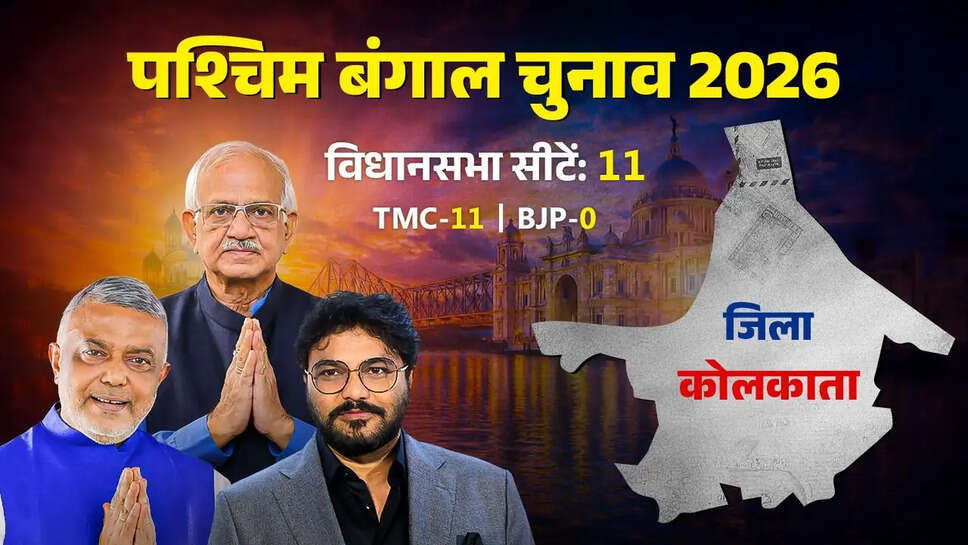
The political history of Kolkata's assembly seats is quite intriguing. For many years, the CPI(M) and leftist parties dominated the region. From 1977 to 2011, the Left Front government held most seats, but since 2011, the TMC has established a strong foothold under Mamata Banerjee's leadership, capturing the urban vote bank.
Recent Election Results
In the 2024 Lok Sabha elections, the TMC secured victories in both Kolkata North and Kolkata South, maintaining its dominance. Although the BJP increased its vote share, it failed to win any seats, indicating the continued influence of regional politics in Kolkata.
Economic Landscape
Kolkata's economy is diverse, with the Kolkata Port being one of the oldest and most crucial ports in the country, serving as a central hub for trade in Eastern India. The IT, banking, education, and small industries also play significant roles in the local economy, with areas like Salt Lake and Rajarhat emerging as IT hubs.
District Statistics
Area – approximately 185 square kilometers
S literacy rate – approximately 87%
Assembly seats – 11
Lok Sabha seats – 2
Municipal Corporation – 1 (Kolkata Municipal Corporation)
Wards – 140+